Colorectal Cancer is a disease where malignant cells form in the tissues of the colon or rectum.
The colon, part of the digestive system, processes nutrients and helps pass waste. The digestive system includes the mouth, throat, esophagus, stomach, and intestines. The colon is the first part of the large intestine, and the rectum and anal canal form the last part. Colon cancer starts in the colon, while rectal cancer starts in the rectum. Both types are collectively known as colorectal cancer. Early detection and awareness of risk factors like genetics and lifestyle are essential for effective treatment and management, as CRC often shows no symptoms until it’s advanced.
Colorectal Cancer Facts
Colorectal cancer is one of the most common cancers in both men and women.
It is the second leading cause of cancer death for Native people
AI/ANs have a higher risk of colorectal cancer compared to non-Hispanic white adults.
The American Cancer Society’s estimates for the number of colorectal cancers in the United States for 2026 are:
About 108,860 new cases of colon cancer (55,410 in men and 53,450 in women),
About 49,990 new cases of rectal cancer (28,750 in men and 21,240 in women)
Screening Tests: Colonoscopy; Frequency: Every three to ten years
Cologuard – noninvasive, at-home stool-based test (Every 3 years)
Screening Age: 45 – 75
Regular screenings can detect polyps early, potentially saving lives. Make an appointment with
your healthcare provider to discuss the best screening options for you and take a proactive step
towards protecting your health. By taking the pledge to get screened, you can help end colon
cancer in Indian Country.
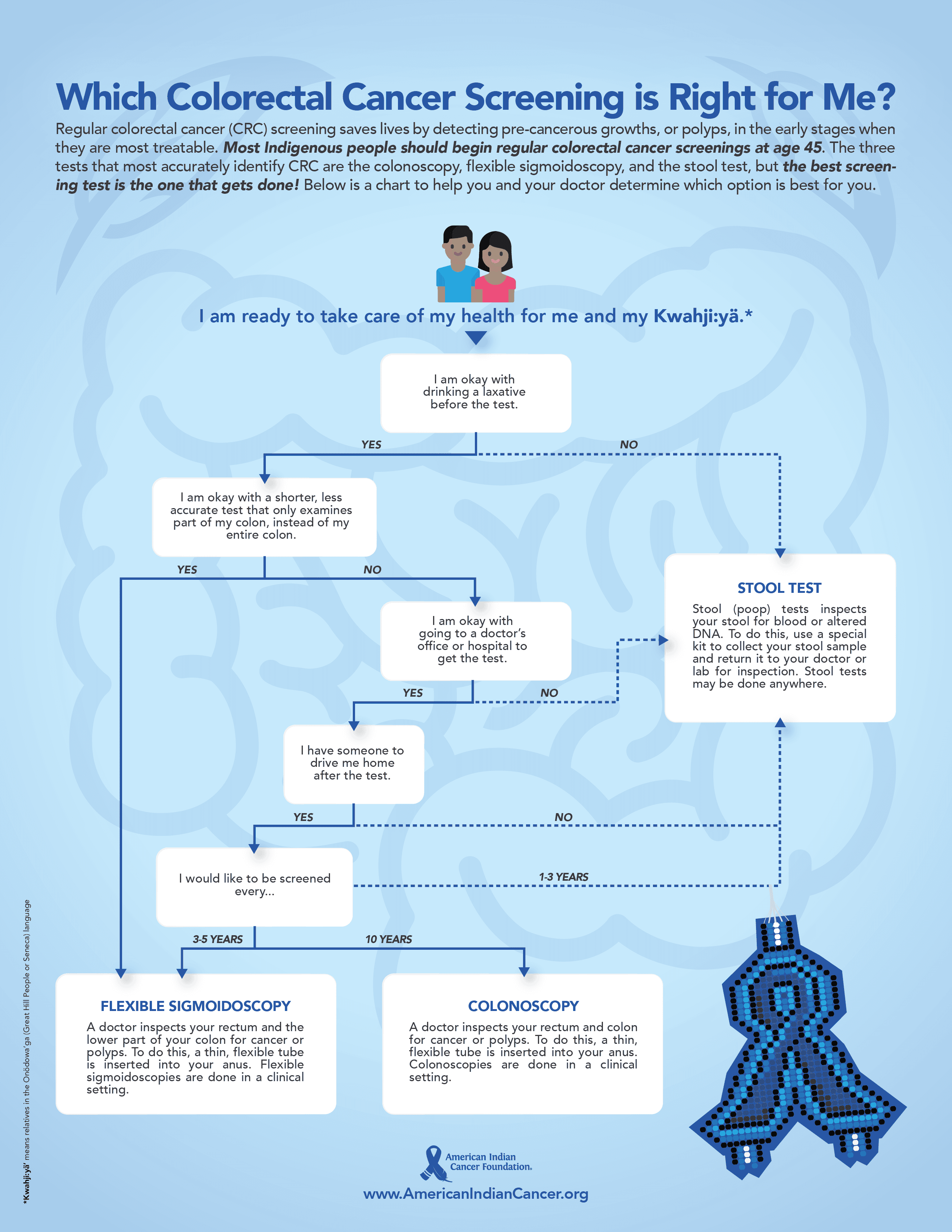
Which Colorectal Cancer
Screening is Right for Me?
The three screening tests that most accurately identify colorectal cancer are the colonoscopy, flexible sigmoidoscopy, and the stool test. But remember, the best screening test is the one that gets done! Use THIS CHART to help you determine which option is best for you.
Indigenous Food for Your
(Gut) Health
FOOD IS MEDICINE. Our ancestors had access to a variety of foods that were important for maintaining gut health. Start adding some of these Indigenous foods into your diet to keep your gut healthy, and help reduce your risk for diseases like colorectal cancer.
Colorectal Cancer Awareness Campaign (March):
Blue Beads
Blue Beads is a national colorectal cancer awareness campaign for our families
across Indian Country. Our team invites Native people of all ages to join us by
wearing blue beads or clothing, and sharing photos on social media using the
hashtag #BlueBeads to raise awareness of CRC screening. Colon cancer
disproportionately affects our communities and is the second leading cause of
cancer death.
Colorectal Cancer (CRC) is the second leading cause of cancer death for Native people. There are usually no symptoms until it’s too late; regular screenings can detect polyps in the colon early before they turn into cancer. Getting screened saves lives by detecting precancerous growths in the early stages when they are easiest to treat and remove, potentially helping to save lives. Most men and women should start screening at age 45 but can have it done earlier if symptoms are present.
Blue Beads Day aims to educate people about the importance of early detection and remind men and women to stay up to date on their cancer screenings. Because this national campaign happens on a digital platform, community members can participate from anywhere! Help us end colon cancer in Indian Country by taking the pledge to get screened! Once you have taken the pledge, our team will send you the “I’m Behind CRC Screening Pledge” certificate.
Support relatives across Indian Country by sharing Blue Beads colorectal cancer resources and screening opportunities.
Wear
Wear blue beadwork or clothing to raise awareness of colorectal cancer and honor those affected by the disease.
Share
Share a photo on AICAF’s social media using #BlueBeads to show your support and encourage others to join in. Spread the word to friends, family, and coworkers to help raise awareness of colon cancer in Indian Country.
Get Screened
Talk to your health care provider to schedule your next screening, and learn more about ways to lower your risk. Talk to your loved ones about the importance of early detection and encourage them to get screened.
Learn
Engage with AICAF the entire month of March as we provide new colon cancer resources, toolkits, webinars, and podcasts. (Will need to update links in here each year) Stay informed about colorectal cancer prevention and share our educational materials with loved ones in your community!
Join the AICAF Community
Like the American Indian Cancer Foundation on Facebook and Instagram, follow us on Twitter, and sign up for our newsletter.